Friday, 16 June 2017

Wednesday, 24 May 2017
Tuesday, 23 May 2017
Monday, 22 May 2017
Wednesday, 5 April 2017
Research and Planning
Research and Planning
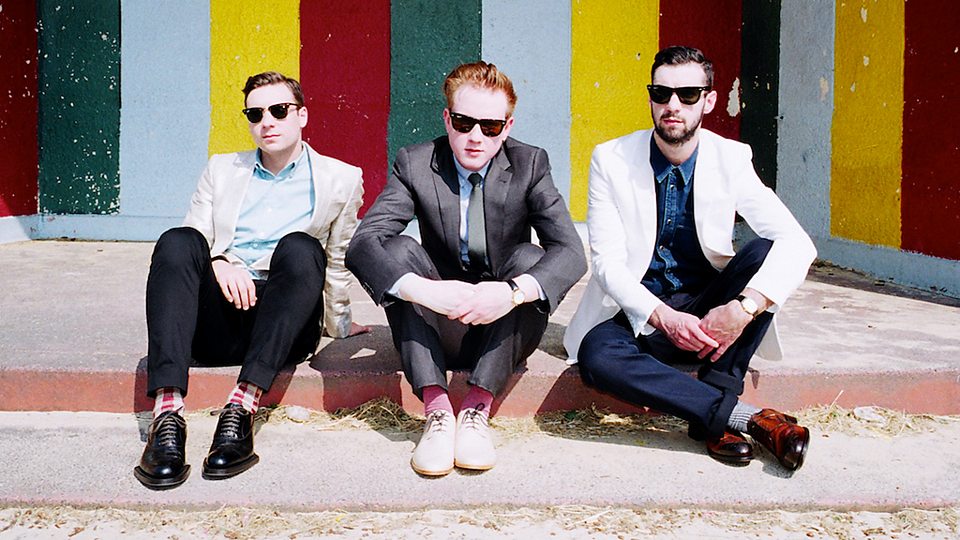
Over the years that Two Door Cinema Club have been a band, their physical appearance has drastically changed over the years. Alex Trimble, the main vocals and rhythm guitar, has gone through three stages of his appearance, he started with the original Justin Bieber haircut and had long hair with a fringe swept to one side, then when the band released their second album 'Beacon' he had scrapped all that and gone for a quiff, but once their third studio album 'Gameshow' was released his hair had grown out again and down to his shoulder. The bands main guitarist, Sam Halliday has kept the same image through the times, beside having hair more swept to the side. The bands third and final member Kevin Baird who plays the bass, has changed from having a beard with medium hair, to having a skinhead with a longer beard. The clothes that the band wears varies as they can been seen wearing, shirts, blazers, hoddies, cardigans, leather jackets, polos, denim, t-shirts and tank tops. Through the years the band has also kept the same three core members, with them adding an extra two members for when they go on tours. The tone to their videos is usually brightly coloured with it being set in daytime, or using a white background with bright colours in the foreground to help them stand out. The only videos that don't fit this tone are 'Sleep Alone' as the video uses a paranormal/eerie tone to it with the band not knowing whats going on and other weird things happening to them. Another one of their videos that steps out of their norm is 'Changing of the Seasons' due to it being all in black and white. The final video is 'Undercover Martyn' which has them put up against a black background for the whole video, this video does however use colour in certain parts. Their videos use many different locations for filming, some videos are filmed out in every day streets, other are filmed in houses or singular rooms, more are filmed in studios that use solid colour backgrounds, they also use places such as woods and finally they have even filmed on a pier for their song 'Sun'. Not many of their videos contain a narrative to go along with the music, some parts of their videos may be derived from the lyrics to have a simple interpretation, many of their music video will also contain sections which have them performing live, and in some cases in front of an audience, and can also contain choreographed dancers. They also don't include the two members that they tour and record with in their music videos, unless is them live in concert, other then that type of music video it is the original three members.


Sunday, 26 March 2017
Music Videos: Styles, Conventions and Techniques
Styles, Conventions and Techniques
There are many different types of styles, conventions and techniques used for producing a music video.
The first type of style is in-concert and 'as live' footage. These types of videos show the band/artist playing a live performance, whether it be an actual concert or a set-up one for the purpose of the video.
This video is Elvis Presley performing his song 'In the Ghetto' in front of a live audience in a concert, this fits the description as he would have had to sing this live and without being able to lip sync like they do in regular videos as because he is live there wouldn't be time to edit the song so that his lyrics match up with the video.
This video is performed by Live and it is them performing live, however they are live in the video not in an actual concert so it plays in with the narrative of the music video. The are performing live among the people who are acting for the narrative of the music video which is people running away from a flood in a city.
The next type of music video styles is narrative and interpretive. The videos that use narrative are for the videos t have a story to the lyrics for the audience to follow. This can be a literal follow from the lyrics or it can be more interpretive, taking cue from the lyrics sung but instead developing out from there.
This song 'Cool' performed by Gwen Stefani is a narrative music video as it follows her meeting her ex-boyfriend and his new girlfriend, while the two of them reminisce about their past together with constant reminders of what their relationship was like by the interactions between the boyfriend and his new girlfriend.
The video for this song 'Try' by P!nk is an interpretive music video as their is no oveall story to go with the song instead what is happening in the video is pulled from the lyrics so this video follows what looks to be a domestic abuse relationship on both sides with the two of them abusing each other and then making up again to pretend that nothing has happened between them.
The next type of style is surrealist which are video that are often surprising and unconventional, and have very little relationship with the lyrics on a narrative level.
This video 'Come to Daddy' is surrealist as none of the video is derived from the lyrics as the video is made up of an old woman with her do, a face coming through a television and adults dressed up as little girls running around a council estate and the surrounding areas.
The next type of music video is impressionist which try to capture the emotional tone of the music rather than a meaning from the lyrics. This is seen to make the video more 'artistic'.
This video 'Hey There Delilah' by the Plain White T's is impressionist as the video has no literal meaning with the lyrics besides the video including what is assumed to be a couple in a long-distance relationship. This video sets the tone as the video follows the girl in the relationship showing how lonely and the better life her boyfirend is trying to accomplish for them. This video could also be seen as artistic as the two white strips at the top and bottom of the video could be interpreted as being a polaroid picture.
The next type is intertexual, which includes synergy, allusion, pastiche, parody and homage. Synergy is when the music video will have references to whatever source material it is related to. Allusion is when it alludes to another media text, event, person or historical or cultural reference. Pastiche is a light hearted interpretation of another artists style. Parodys 'poke fun' at the original subject matter and homage pay respect to other influences.
This song 'Beauty and the Beast' performed by Ariana Grande and John Legend ties in which the live action remake of the film of the same title by including characters from the films such as the beast, Belle, Mrs.Potts and Chip. The dancers in the music video are choreographed to form arounf Ariana in the shape of a rose which is a huge plot point throughout the entire film.
This video of 'Shape of You'' by the Key of Awesome is a parody of the song originally by Ed Sheeran. Its parody as the video is pretty much identical to the original source material but the lyrics to the song are different and pokes fun at things that don't really make sense with the orginal song and video.
The next type of music videos are animation which are videos that are wholly or partly animated in some way whether it be traditional animation, 2D animation, 3D animation, motion graphics or stop motion.
This video by 'Tech Noir' by GUNSHIP is an animation as the majority of the video is claymation so it would be stopmotion animation as the characters have to be set into each position very slowly to make it look like they are moving naturally. This video does also include live footage but as the majority of the video is animated it will be classified as animation.
The next type of music video is a technique which is lip-sync and includes miming and playback. This is when a performance video may require the artist to mime the lyrics so they appear synced to the track. Lip-syncing to a playback for more narrative-based music videos is also common. Sometimes the speed of the song is changed when filming for various effects.
This song 'Streets of Philadelphia' by Bruce Springsteen is different in that while filming the video only the instruments were used as a backing track while the vocals were recorded on a microphone that was attached to the singer. This is lip-synced as the singer didn't sing this at the time of filming, the vocals were matched in editing to go along with his lip movements.
The next type of techniques is from editing as music video are often edited in interesting ways, sometimes even challenging the conventions of classic continuity editing. The first type of editing is cutting to the beat, this is cutting the shots to match the beat of the music which helps establish a rhythm to the edits.
This video by LMFAO performing 'Sexy and I Know It' is cutting to beat as the choreography and the transitions between shots is matched to the beat to make the video more appealing to the audience.
The next type of music video is post-production effects. Visual effects are used for a number of reasons, the first is that the artist may want to enhance and impress the audience into watching if the effects are cutting edge. They could also be used to attract a slightly different audience if the effects are interesting, mesmerising or complex. The effects that are used should suit the genre of the music video.
This song 'Leave me Alone' by Michael Jackson is post-production effects as although parts of the video uses chroma key (green screen) large parts of the video is post-production effects to coincide with the green screen effects and impress the audience in a large way.
The next type of technique is split screen, this is when multiple images of different events are shown on screen at the same time. Split screen is different to multi-imaging but is the modern equivalent as non-linear editing makes the process more efficient.
This video 'Sugar Water' by Cibo Matto is split screen as it uses two different videos along side each other for the entire video. It shows two different lives of two women who have completely different lives.
The next type of technique is chroma key which is footage shot in front of a green screen or blue screen and the unwanted block colour area behind is removed (chroma keyed) out so that the second images, layered behind, is visible.
This music video for 'Don't Stop 'Til You Get Enough' by Michael Jackson uses a green screen to have the background made up of changing colours and floating shapes behind the artist. Its also used to different places for him to dance in and at one point in the video post-production effects are used to have three singers in the video.
The next type of camera technique is camera movements. This can include pans, tracking shots, tilts and crab shots to show movement. This can create flow and excitement for the audience.
This song 'I Too Deep' by Sum 41 comes under camera movements as it includes multiple types of camera movements right from the beginning such as pans, tracking shots and tilts.
The final type of technique is camera angles and shot types. By using various shot lengths and angles, a filmmaker can create meaning and tone within a media text. Shot variation can also show different elements of mise-en-scene.
This song 'All Star' by Smash Mouth uses multiple different camera angles and shots throughout the entire video, it has long shots, medium shots, close ups, panning shots, tracking shots, low angle, high angle and aerial shots.
Subscribe to:
Posts (Atom)