Showing posts with label Year 2-A: Corporate Video. Show all posts
Showing posts with label Year 2-A: Corporate Video. Show all posts
Monday, 9 January 2017

Sunday, 8 January 2017
The different types of briefs
The
different types of briefs
There are many different types of briefs in the media
industry, these are a set of instructions that is given to a person for a job.
There are eight different types of briefs that are used in the industry and
they are:
·
Contractual
·
Negotiated
·
Formal
·
Informal
·
Commission
·
Tender
·
Cooperative
·
Competition
There are advantages and disadvantages for all of these
styles of briefs.
Contractual briefs are those that are held together by a
contract by the commissioner and the producer of the product. These types of
briefs are bound by the laws of the land and therefore must be adhered
stringently. If the contract is broken this can result in multiple penalties,
which can include a fine or even time in jail. An advantage to contractual
briefs is that the production company knows exactly what they are involved in
and what they need to do for the product as the brief will be specific ad they
have to follow it very precisely as there is no negotiating. A disadvantage to
this type of brief is that if the media company feels that something in the
brief could be changed or gotten rid of, then they are changing the brief and
the final product which goes against their contract and what the commissioner
wants the product to be. This could result in the client taking legal action
against the company which could further result in the company given a bad
name/reputation saying that they don’t finish briefs to standard, which could
hinder them later down the line if they want to get another production.
Negotiated briefs are negotiated between the commissioner
and the producer, this can be about the content or even the cost of the
production. There will be a set of terms and conditions within the brief that
must be followed. This also means that the terms and conditions are negotiated
to enable that the commissioner and producer reach an agreement. If the brief
that is given to the producer is without specific details on important matters
such as the budget and fees, then the producer may question and negotiate these
elements. An advantage to negotiation is that because the commissioner and
producer are discussing terms to make brief more flexible for between the
client and the producer and can easily discuss different ideas without there
being any hostility about their different ideas. A disadvantage is that the
brief can be seen as quite ’flaky’ as certain aspects within the brief won’t be
set in stone and official.
Formal briefs are when a media company will be given a brief
by the client which outlines the product they want to be made. This type of
brief is very open and only gives out enough information to the client for then
to be able to produce the product, any issues or information that the media
company would like to go over can be discussed during the negotiations with the
client. This type of brief means that the client will be open to any ideas or
issues if there are any tat can be thought of by the media company. This can
result in the work being creative for the media company and there is also room
for negotiation. A disadvantage to this type of brief is that the production
company may feel the client has not offered enough information for them to work
from and complete the product to the standard that the client wants. Another is
that the brief is not always legally binding and that could bring up problems
within the project for things such as financial issues or even a breach of
contract.
Informal briefs are written with the intention to provoke a
response from a client. They may be written in average, day-t-day language so
they are less formal than others. They are usually not documented and are
verbal. The client and employer will just discuss the requirements for the
product that will be made and end on agreeing on the product that will be
created. An advantage to informal briefs is that the client will be able to
look at different ideas for their product from different company’s perspectives
and in effect will be able to produce their product to a very high standard if
one idea that gets pitched stands out from the others. A disadvantage for
informal briefs is that if a company performs a pitch and is ten turned down,
this can set them back as a business and they may struggle to find other projects
to work on.
Commission briefs is when a large company will hire a lesser
independent company to produce and create the product for them, instead of them
making it themselves. Once it has been made, the client may then go on to use
the finished product at external client who will then be the ones who pay the independent
company for the work that they did. The
brief won’ be negotiated between the company and client, but it will be
negotiated between the two production companies. An advantage of this type of
brief is that the larger companies don’t have to do all the work and can spread
it out equally between the companies. A disadvantage is that because two
production companies may be working on the project, there could be conflict
between the two.
Tender brief is when the client will advertise their brief
and then a production company will bring together a proposal that they will
show to the client, there may be multiple different proposals that are brought
to the client so they can then think about which one they think is ideally
suited to the brief and offer the job to the production company that produced
that brief. An advantage is that the client will be able to look at many
different proposals so they will be able to choose an idea that they truly
believes goes well with the brief. A disadvantage can be that if a company’s
proposal is turned down then this can set them back as a business as the
effort, time and resources that went into making the idea has be turned down so
they can no longer use it and the time wasn’t used effectively as they could
have been working on something else.
Co-operative brief is when normally two companies are hired
to work on the brief that has been given to them, once they have been given the
brief they may then work with one another. If conflict arises between the two
companies then a negotiated brief may be brought in to resolve the dispute. An
advantage of this type of brief is that there will be many different creative
inputs so there are many ideas to choose from to what fits the brief the best.
A disadvantage is that this type of brief is easily prone to arguments as it will
be two different companies with their own creative ideas.
Competition brief is when a client will but their brief out
there so that many different production companies can see what they have come
up with. It is seen as a competition as the production companies will come up
with something that fits the brief but the client will pick the one that they
think is the best for what they are looking for, they then will have their work
published. An advantage of this type of brief is that the client will only have
to pay one production company, the one that the pick as the ‘winner’. A
disadvantage to this type is the same as tender brief, in that the other
production companies who aren’t picked have used all their time for their work
not to be picked, so everything that they done has been wasted.
Thursday, 3 November 2016
Sunday, 9 October 2016
Current Practices in Corporate Video Production
Current
Practices in Corporate Video Production
In this essay I will be talking about the laws that
production companies have to follow when producing a corporate video. These
include: contempt, copyright, privacy, defamation, courts, ethical and
finishing off with technologies. I will be looking at a variety of videos that
cover these points.
Copyright:
Copyright is when an individual or company wants to protect something
that they have created material and want to protect them from other people
using it without permission. The creator can control how the material is used,
if a substantial (significant, not quantity) amount of their content is used,
then they get a reward. The works that the copyright laws cover is Literacy,
Musical, Dramatic, Pictorial/Graphic/Sculptural, Motion pictures, Sound
recordings and Architectural. Copyrighted material can be used in certain cases
such as the news and by critics for reviews. Copyright is also a territorial
right so UK copyright abroad is protected and foreign works are protected in
the UK.
https://youtu.be/1DjuUln6xZs
This video is a good example as follows the copyright rules as it just uses
royalty free music so they can use as much of it as they want without getting
any copyright strikes. There are no clips or music that may be copyrighted as
clips in this video are all from frontier airline staff and inside their
airport, so it is all their own works.
Privacy:
Privacy is when the courts will allow people to live a private
and family life over the medias idea of freedom of expression. This law has
developed since the European Convention on Human Rights. Privacy law is
reporting on someone’s personal/sexual live, their finances, information about
their health and filming in their house without permission. Invasion of privacy
is when someone takes to court about their private information being realised
so they want a reward for the level of damages done, the highest award recently
was £60,000 and then the losing party have to pay the legal costs for the
trial.
An example of privacy is when a someone is being filmed and
there is personal information in the shot that someone doesn’t want the public
to know, so that part of the video would either need to be cut or blurred out.
Defamation:
Defamation is the law that allows individuals, companies or
firms to sue is their reputation is damaged by a piece of material that is
published and makes defamatory comments about either of them. Defamation counts
if it: lowers someone in the estimation of right-thinking members of the
public, causes them to be shunned or avoided, disparages them in their office,
trade or profession and/or exposes them to hatred, ridicule or contempt.
An example of defamation is when companies slander each
other and say that one is better compared to the other, another example is when
a newspaper/magazine prints information about someone that they know is untrue
even before they release it to the public.
Fair Use:
Short clips of copyrighted material may, under certain
circumstances, may be used for certain purposes such as criticism, news
reporting, teaching, and research, without the need for permission from or
payment to the copyright holder. The media doesn’t just have to be a short clip
of a video, it can be a small sample of a piece of music or it can be a
screenshot from a video/film/television show etc.

An example of fair
use is in YouTube videos when they use screenshots/clips from a video or film
Ethical Issues:
In corporate videos, ethical issues are when a company,
product or individual may include footage that can offend a certain religion,
ethnicity or individual, or show them in a certain light. These issues can be
used to try and change the outlook that the general public have on a specific person,
culture or religion so that they get targeted by the public as well.
An example of this, is, if a video that was filmed in an
office only had filmed scenes that only included Caucasian male and no one
else, this could mean that the producers being prejudice to woman and other
people of ethical genders.
Release:
Releases are a form of legal permission that need to be
signed by the cast and crew, owners of music used in the production and the
owner of buildings and land that are featured in the video. They must be signed
by these people for the production to start, if they don’t get the permission
or signatures from the people involved filled in then they are not legally
allowed to publish the video with the individuals who have not filled in the form.
An example of this would be, if a corporate video filmed in
a public location such as a train station or a library without getting the
permission from the owners of those locations, then they uploaded the video
onto the internet or wherever they are uploading it without them knowing.
Technologies:
To make a corporate video the production team will need
multiple items that are required for them to finish the entire product, they
include a camera, editing software and any other technological items such as
artificial lighting and microphones to complete the production.
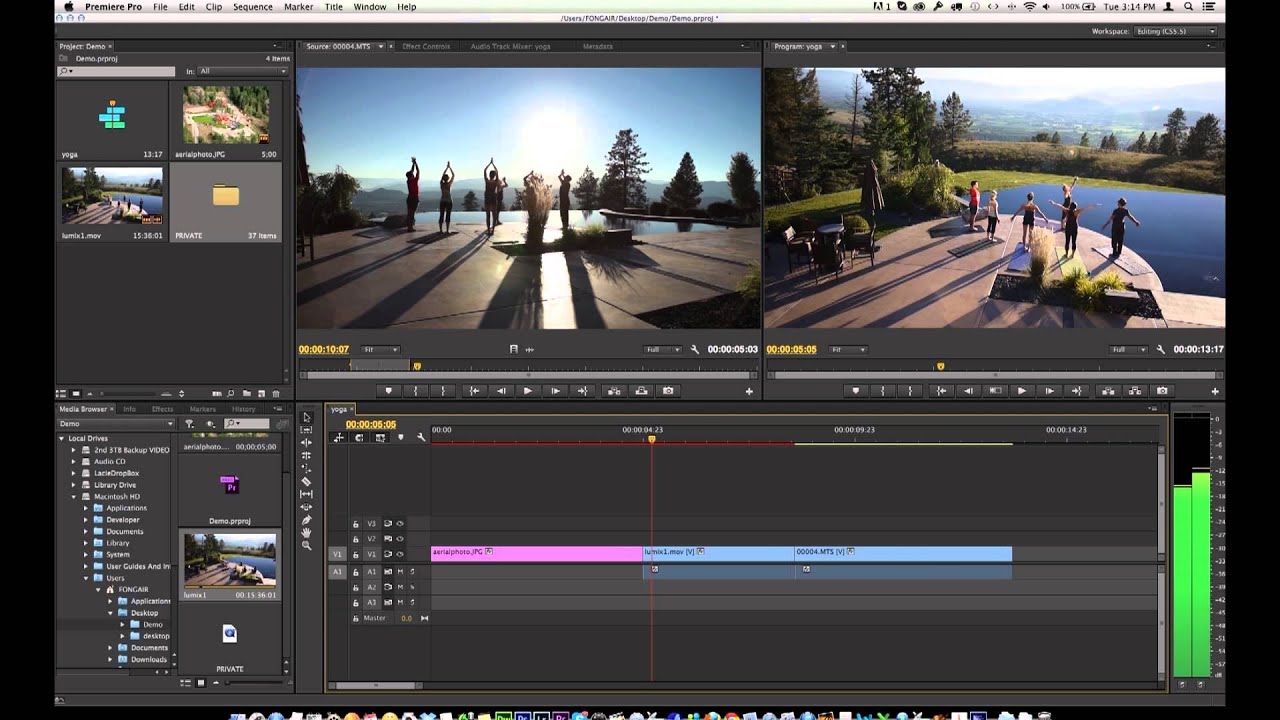
An example of editing software a company might use is Adobe
Premiere Pro CS5.5. This software can support video up to 10,240 × 8,192
resolution, at up to 32-bits per channel colour, in both RGB and YUV. It also
has a 5.1 surround sound mixing and allows the user to import and export
formats that don’t just include QuickTime or DirectShow and supports a wide
variety of video and audio file formats and codecs on both MacOS and Windows.
It can also integrate with the following adobe programs: Adobe After Affects,
Adobe Photoshop and Adobe Story, OnLocation and Prelude.
An example of a Camera that can be used is a Canon EOS
1200D. This camera is relatively cheap for anyone starting off in video as it
only cost a reasonable price of £279.99 and is an easy camera to use, so is
excellent to start off with. This camera has a 18MP sensor compared to the
12.2MP sensor on its predecessor the 1100D, it has a Digic 4 image processor.
It also comes bundled with Canon’s Digital Photo Professional editing software
and also comes with a 28.8-88mm lens.

An example of other essential technologies is a Rode
VideoMic GO Lightweight On-Camera Microphone. This microphone is a good
addition to the camera as it only weighs 2.6 ounces so it keeps the camera
lightweight for easy manoeuvrability and can be kept steady. The mic also only
requires a standard 3.5mm headphone jack so it will be compatible with almost
any camera.

Wednesday, 21 September 2016
Corporate Videos Prezi- Video Analysis
The video I was analysing was Fjord Sustainability mash-up event.
Wednesday, 7 September 2016
Norwich Production Companies
Norwich Production Companies
 Ember Films:

Ember films are a award winning production company that are based in Norwich and London, they create content for broadcasts, cinemas and on the internet. They range from doing interviews to films that are shown on the IMAX. Some major companies they have worked include, BMW, Lotus, BBC Earth and Herschel. They have a variety of their own work on their website, showing that they are very proud of the work they have produced.
Subscribe to:
Posts (Atom)